Red light therapy and sleep: what it can and can’t do
Want to see whether red light fits your recovery routine?
Book a first visit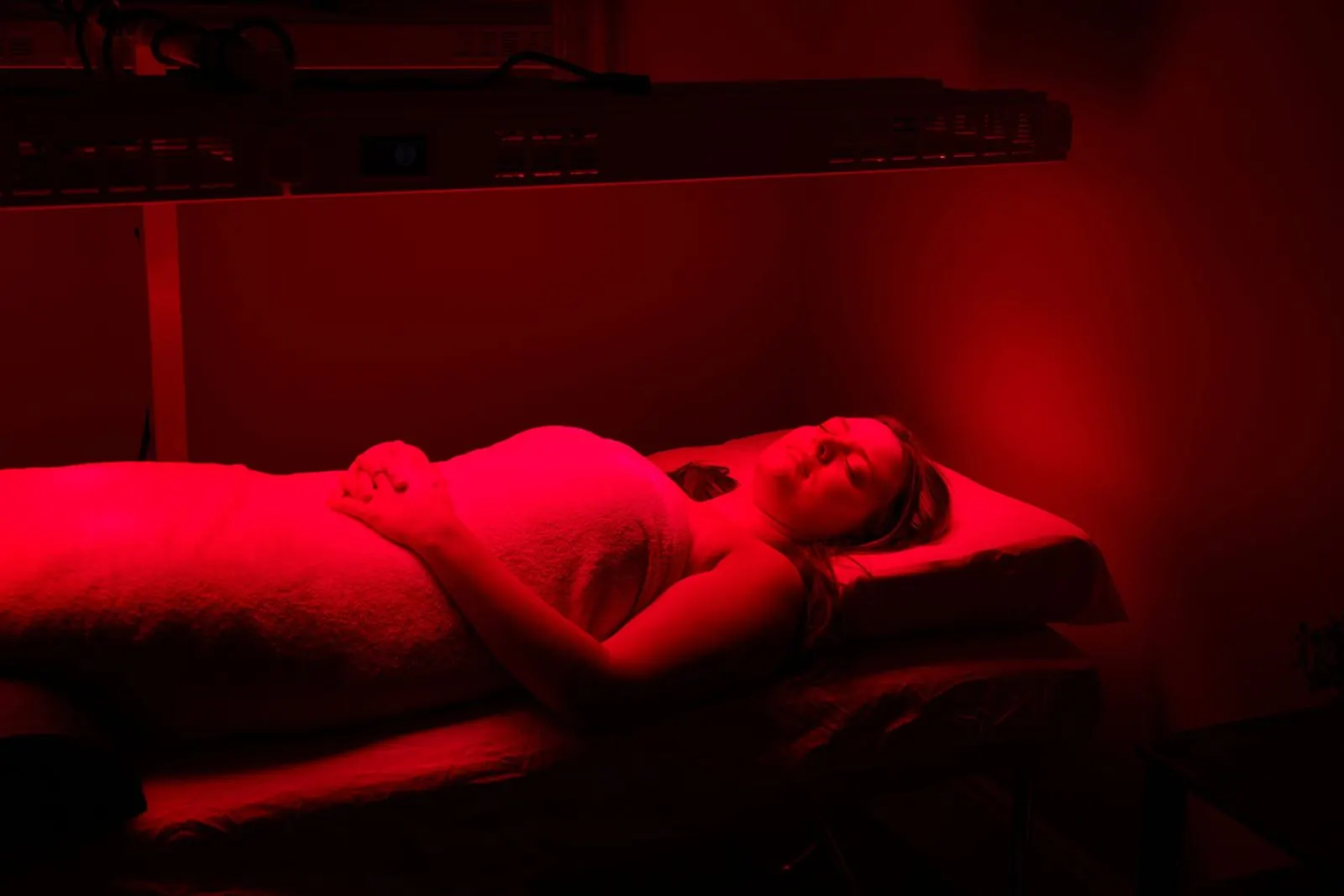
If you’ve ever lain awake at midnight or woken up foggy after eight hours, you know poor sleep affects everything: mood, training, healing, patience. At CREW we treat sleep as part of recovery, not a separate problem. That’s one reason we offer full-body red light therapy.
Red light is best known for muscle recovery and skin. Its link to sleep is newer and the research is still small, so this post sticks to what’s known, what’s promising, and what a session here is actually like.
What red light therapy is
Red light therapy uses specific wavelengths of red and near-infrared light. The light reaches your skin and the tissue just beneath it, where cells use it as a signal to make energy for repair.
At CREW you lie in a full-body bed that surrounds you in light for about 20 minutes. There’s no UV, so it won’t tan or burn. Most people describe it as warm, quiet and relaxing. We give you eye protection for every session.
It’s different from the blue-heavy light of phones and screens, which can push your body clock later. Red light sits at the other end of the spectrum.
How it may help you sleep
There are four reasons people find it helps. Some are backed by early research; others are simply how the session feels.
It may support your melatonin rhythm
Melatonin is the hormone that tells your body it’s time to sleep. A small 2012 study of female basketball players found that 14 days of whole-body red light improved their sleep quality scores and their melatonin levels compared with players who didn’t get it (Journal of Athletic Training). It was one small group of athletes, so treat it as promising, not proven.
It’s a genuine wind-down
Twenty minutes lying still in a warm, dim room is calming by itself. Many patients tell us they leave a session noticeably more relaxed, and that carries into the evening.
It sends a light signal your body clock understands
Your internal clock runs on light. Unlike screen light at night, red light isn’t thought to disrupt that rhythm, which makes it a reasonable part of an evening or daytime routine.
Less soreness can mean easier sleep
Pain and soreness are two of the most common reasons people sleep badly. Red light is used for muscle recovery and joint discomfort, and when you’re more comfortable, falling and staying asleep tends to be easier.
What the research does and doesn’t say
The honest summary: the research on red light for sleep is early. The studies so far are small, use different devices and doses, and mostly involve healthy adults or athletes. Results are encouraging, and nothing suggests red light makes sleep worse, but it isn’t a treatment for insomnia or sleep apnea.
If you snore loudly, stop breathing at night, or have trouble sleeping most nights for weeks, talk with your physician first. Those can be signs of something red light won’t fix.
What a session at CREW is like
- About 20 minutes in a full-body bed with red and near-infrared light.
- Fully clothed or in light clothing, whichever you prefer, with eye protection.
- Warm, not hot. No UV and no tanning.
- Best used consistently. A few sessions a week tends to work better than an occasional one.
Many patients stack it with PEMF or the infrared sauna for a full recovery visit, or add it to a chiropractic appointment.
Pairing it with simple sleep habits
Red light works best alongside the basics:
- Keep the same wake-up time every day, including weekends.
- Get outside light in the morning.
- Dim the lights and put the phone down an hour before bed.
- Keep the bedroom cool and dark.
- Stop caffeine by early afternoon.
Common questions
How long until I notice a difference?
Some people feel more relaxed after the first session. For sleep, give it a couple of weeks of regular sessions before judging.
Is red light therapy safe?
For most people, yes. We provide eye protection. Check with your doctor first if you’re pregnant, take medication that makes you sensitive to light, or have a history of skin cancer.
Can I do red light without being a chiropractic patient?
Yes. Recovery sessions can be booked on their own. Ask the front desk about times and pricing.
Find out what’s going on.
Your first visit includes a full exam, your scans, and a doctor who walks you through what they show and what to do next.
General information from the doctors at CREW Chiropractic, not medical advice for your situation. If something here sounds like you, book a visit or talk with your physician. For a medical emergency, call 911. How we write and review these articles.