Is a chiropractor good for athletes? What sports chiropractic actually does
Training through something that won’t settle?
Book a first visit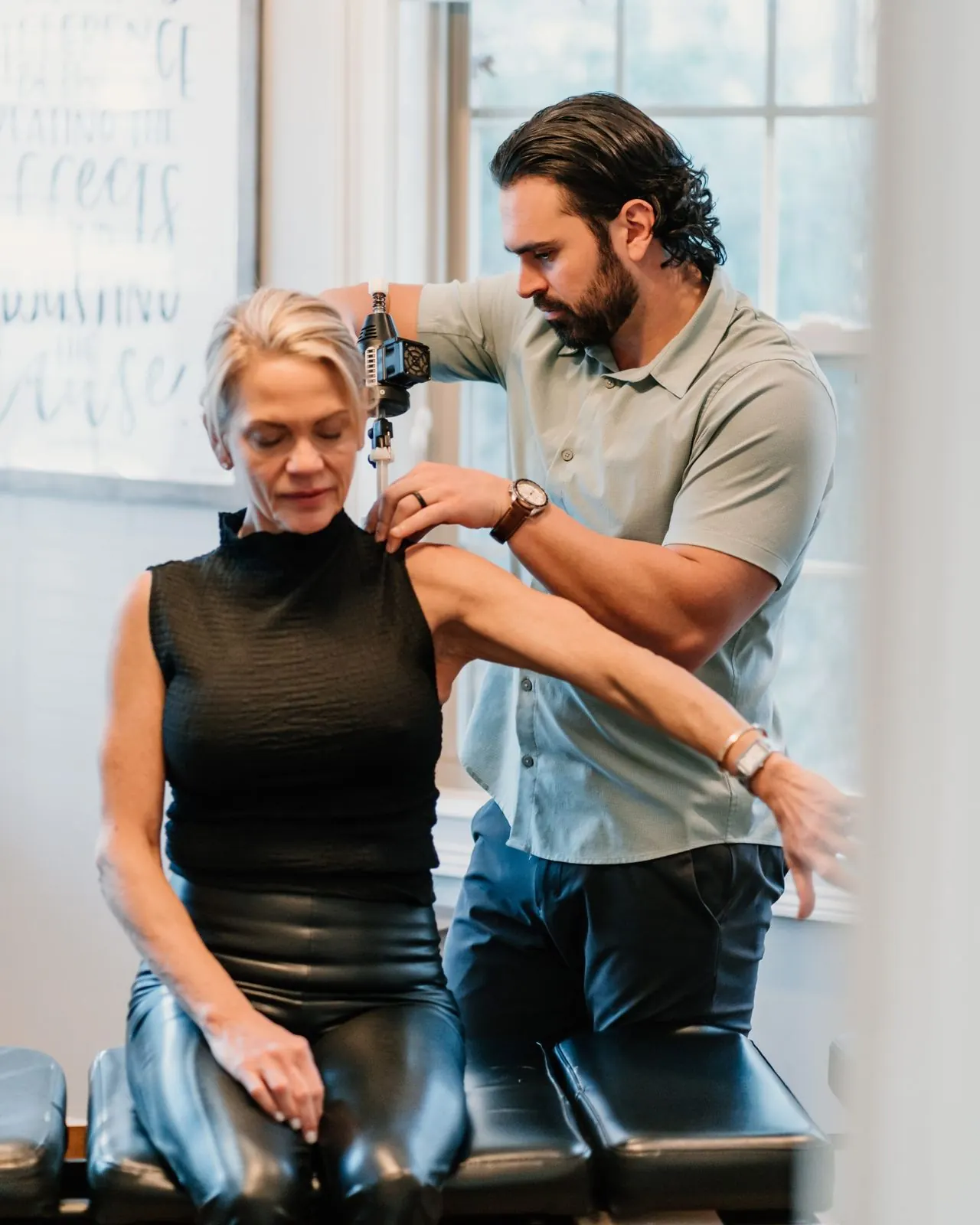
Pro teams travel with chiropractors for a reason. But most of the athletes we see at CREW aren’t pros. They’re runners training for a half marathon, lifters chasing a new number, tennis and pickleball players, high school athletes, and weekend warriors who want to keep playing without pain.
So is a chiropractor good for athletes? For the right problems, yes. Here’s what sports chiropractic actually does, and what it doesn’t.
What a sports chiropractor does
Finds the weak link
Pain in one spot often starts somewhere else. A sore knee can come from a hip that doesn’t rotate well. Shoulder pain can come from a stiff upper back. We start with a movement screen and your first-visit scans, so you have real numbers instead of guesses.
Treats what hurts
Adjustments for the spine and joints, soft-tissue work for the muscles that have tightened to protect an area, and SoftWave for tendon pain that hasn’t responded to rest. Dr. Eric and Dr. Brett both specialize in sports care, and Dr. Mallory and Dr. Brett in extremities like shoulders, knees and feet.
Keeps you training
We’d rather change your training than take it away. Most athletes can keep working while they heal, with specific changes to what they load and how.
Builds you back up
Strength and mobility work that fits the program you already follow, so the problem doesn’t come back next season.
Common problems we see in athletes
- Runners: knee pain, IT band pain, Achilles pain, plantar fasciitis, hip flexor tightness
- Lifters and CrossFit athletes: low back pain, shoulder impingement, wrist and elbow pain
- Tennis, pickleball and golf: tennis and golfer’s elbow, shoulder and low back pain
- Team sports: ankle sprains, hamstring strains, neck and back pain after contact
Where chiropractic fits, and where it doesn’t
Chiropractic is good at restoring how joints move, easing muscle tension, and helping you recover from overuse and minor injuries. It works best combined with smart training and strength work.
It’s not the answer for everything. A suspected fracture, a torn ligament that makes a joint unstable, or a serious head injury needs medical imaging and a physician. If your exam suggests one of those, we refer you.
Recovery, not just repair
Healthy athletes come in too: to catch problems early, to move better, and to recover between hard sessions. Our recovery options include PEMF, red light therapy and an infrared sauna, which many athletes stack after training.
Getting ready for a race or season
Come in a few weeks before a race, a season or a meet. We’ll build care around your training block and race day, so you show up healthy instead of patching something together the week before.
Common questions
Do I have to stop training?
Rarely. We’ll tell you exactly what to keep, modify or pause.
Is this only for injuries?
No. Plenty of athletes come in healthy to move better and recover faster.
Do you see youth athletes?
Yes, from middle school through college. A parent or guardian comes to the first visit for anyone under 18.
What’s SoftWave, and is it for athletes?
SoftWave is an FDA-cleared device that sends acoustic waves into injured tissue to support healing. We use it most for tendon problems like Achilles, patellar tendon, tennis elbow and plantar fasciitis. Sessions are 10 to 15 minutes with no downtime.
Find out what’s going on.
Your first visit includes a full exam, your scans, and a doctor who walks you through what they show and what to do next.
General information from the doctors at CREW Chiropractic, not medical advice for your situation. If something here sounds like you, book a visit or talk with your physician. For a medical emergency, call 911. How we write and review these articles.